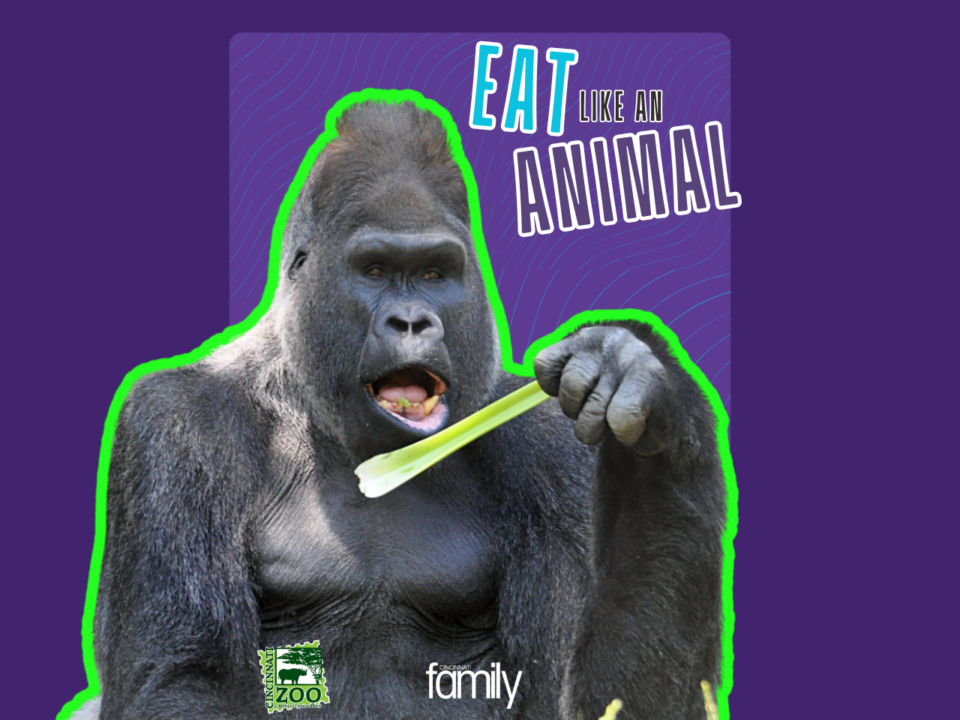
Eat Like an Animal
Looking for some inspiration for your littles (or your whole family) to eat a little healthier? Cincinnati Family Magazine had a chance to chat with Cincinnati Zoo & Botanical Garden’s animal nutritionist, Barbara Henry, to gain insights on some inspirational eaters who call our lovely local zoo home. Henry, who has been a Curator of Nutrition (aka animal nutritionist) for 30 years, and with the Cincinnati Zoo for 20 years, is responsible for making sure every single animal mouth at the zoo has a nutrition plan in place that targets their unique, individual needs.
From the giant jaws of the hippos bursting watermelons with one bite to the beaks of flamingos who need lots of krill to become their trademark beautiful shade of pink, Henry researches and collaborates with leading experts to make sure every animal has their needs met down to the gram. Each type of animal has a meal plan with diet suggestions broken into food types that keepers can choose from based on planned enrichment and training schedules.
Beyond creating meal plans including fresh fruits, vegetables and meat, Barbara also provided us with a wealth of insights on the importance of diversifying each animal’s diet, how food can be used as enrichment and how swaps can be made to achieve balance and keep things fresh. When tasked with the challenge of identifying five animals whose well-rounded diets put the spotlight on heart healthy foods, Henry chose to highlight the following animal ambassadors:
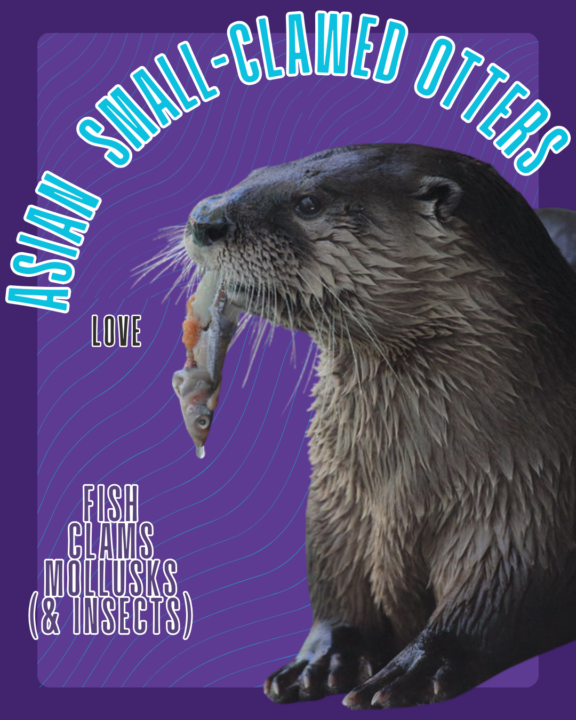
Asian Small-Clawed Otter
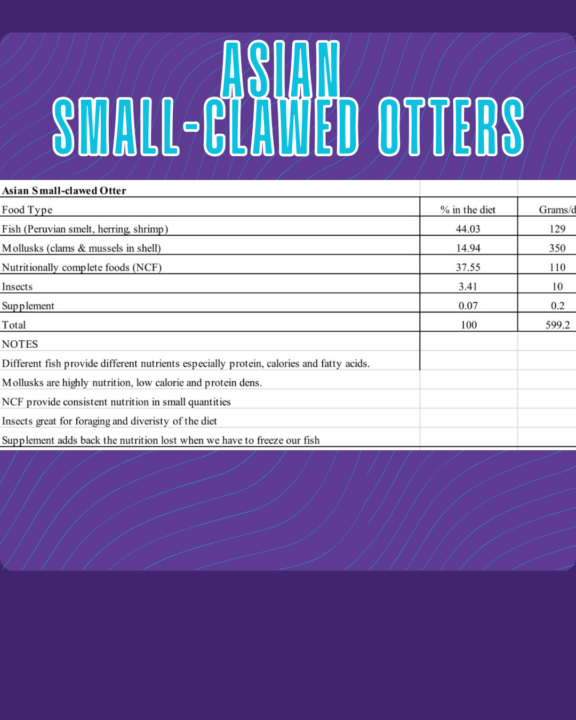
- Fish (Peruvian smelt, herring, shrimp)
- Mollusks (clam and mussels in shell)
- Nutritionally complete foods (kibble)
- Insects
Eat like an otter; click here to try the American Heart Association’s recipe for fish sticks with tartar sauce
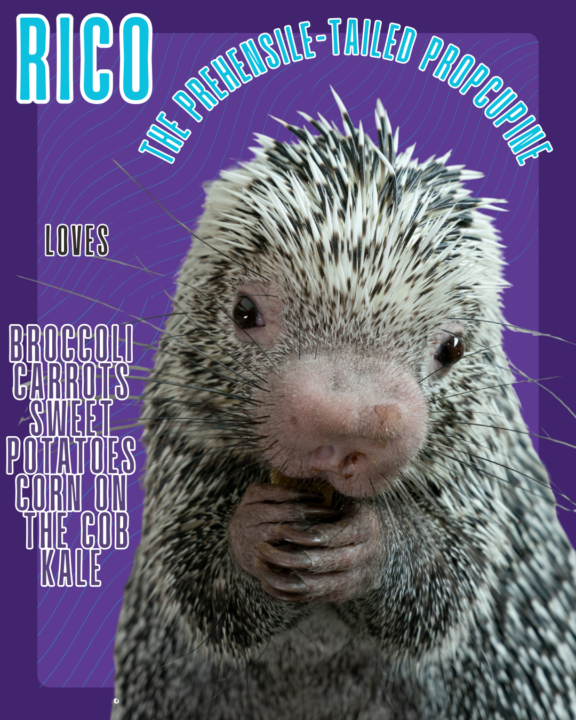
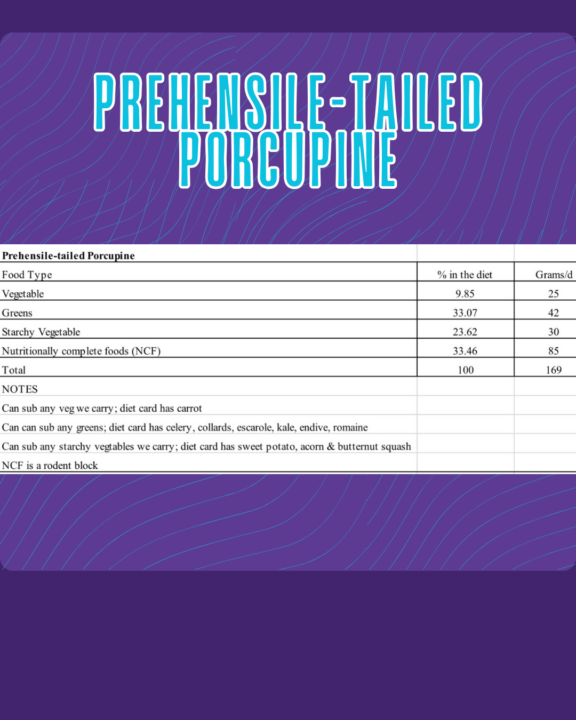
Prehensile-Tailed Porcupine
- Vegetables (carrots)
- Starchy vegetables (sweet potato, acorn and butternut squash)
- Leafy greens (celery, collards, escarole, kale, endive, romaine)
- Rodent block
Eat like a porcupine, click here to try the American Heart Association’s recipe for Buffalo White Bean Hummus with Oven-Baked Sweet Potato Chips
Or try one of Rico’s favorite snacks, banana chips!
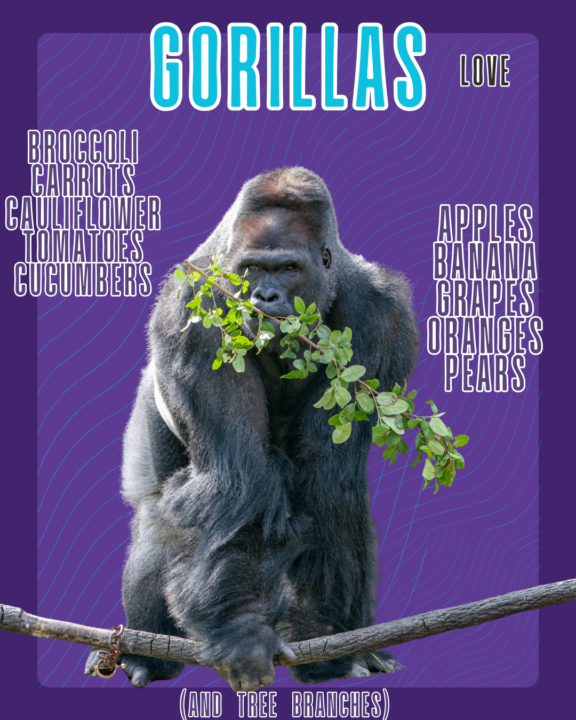

Gorilla
- Fruit (apple, banana, grapefruit, grapes, orange, pear, seasonal)
- Vegetables (broccoli, carrots, cauliflower, cucumber, green beans, green onion, peppers, tomato, seasonal)
- Starchy vegetables (corn on the cob, sweet potato, white potato)
- Sunflower seeds/non-sweetened applesauce during enrichment and training
- Nutritionally complete primate biscuits
Eat like a gorilla, click here to try the American Heart Association’s recipe for Cinnamon Sweet Tortilla Chips with Fruit Salsa
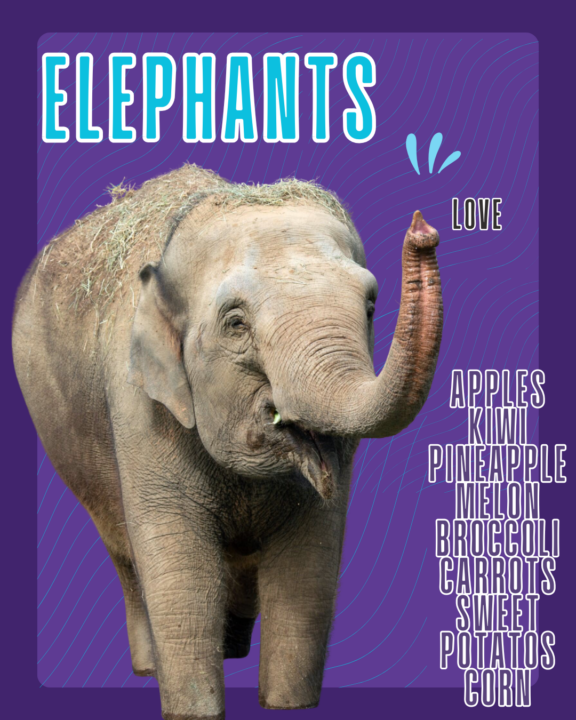
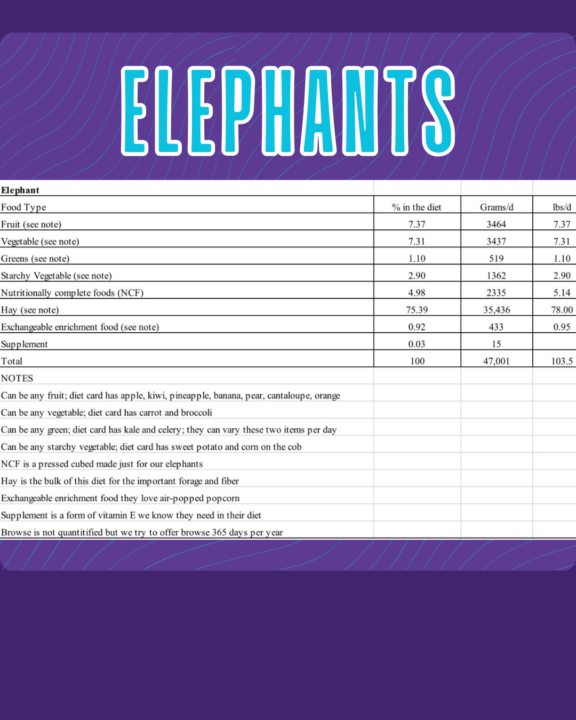
Elephants
- Fruit (apple, kiwi, pineapple, banana, pear, cantaloupe, orange)
- Vegetables (carrot, they LOVE broccoli)
- Greens (kale, celery)
- Starchy Vegetables (sweet potato, corn on the cob)
- Hay and pellets
Eat like an elephant, click here to try the American Heart Association’s recipe for Massaged Kale Salad
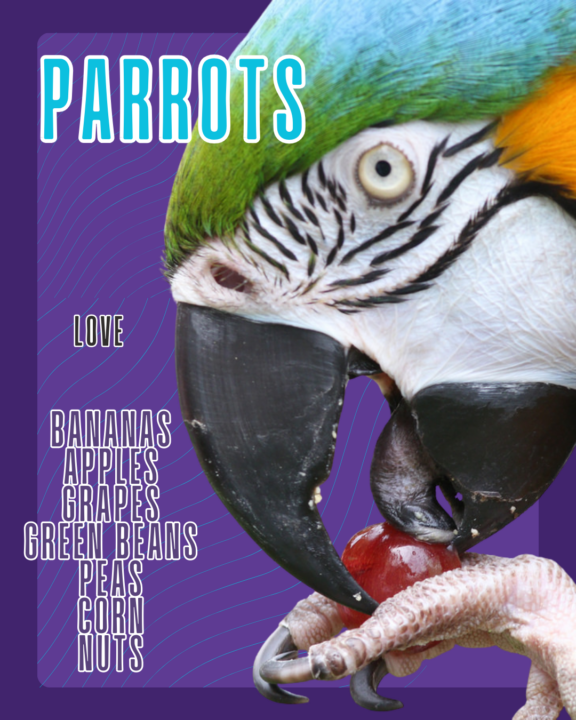
Parrots
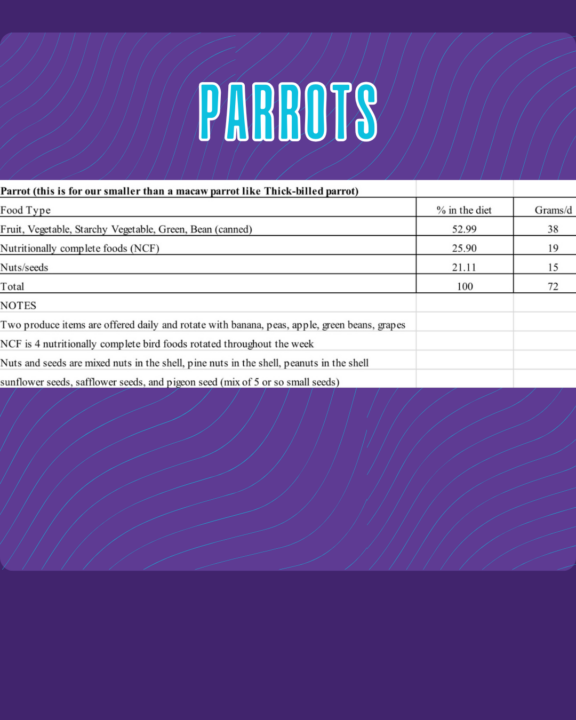
- Produce (banana, peas, apple, green beans, grapes)
- Mixed nuts in the shell, pine nuts in the shell, peanuts in the shell
- Birdseed and bird pellets
Eat like a parrot, click here to try the American Heart Association’s recipe for sweet and fiery roasted nuts.
An abundance of knowledge, Henry also highlighted several important nutritional tips that can be utilized by both zoo animals and humans.
First, the importance of hydration in mammals. Drink that water! Don’t just carry that trendy and cute Stanley around, kids, drink from it, too!
Second, variety is the spice of life! Even a simple Kale Salad for gorillas can be made more enticing to them by adding in a primate biscuit. Serving up a plate of greens may be enough for some kids, and that is great. But adding cheese also adds calcium, and adding dino nuggets on top is adding protein. Henry noted that unlike the zoo’s animals, kids do have the ability to verbally communicate their likes and dislikes, so work with those preferences and consider inviting your kiddos into the kitchen to make healthy foods more palatable to them. Try new recipes together or serve small portions of new foods along with preferred foods. Always encourage and applaud trying new foods.
Third, sometimes a little creativity can make food more fun! While you may not be freezing fruit in an ice block like the zoo’s elephants enjoy, you can appreciate that same creativity and give frozen grapes a try this summer!
Fourth, a fun fact is that MANY zoo animals love, love, love air-popped popcorn. And because it is low in calories and high in fiber it is also a great snack for children four years old and older. Avoid loading on the butter, but a little salt is okay because we all need iodine in our diets.
With all of that said, the next time your animal-loving kiddo is showing some persnickety traits, remind them that they can be a little bit more like their favorite zoo friends by eating like an animal.
See all of the animals featured in this article at
Cincinnati Zoo & Botanical Garden
located at 3400 Vine Street in Cincinnati, OH
Call (513)281-4700 or visit www.cincinnatizoo.org for more details